Why Distributed Teams Expose Weak Leadership Faster
Introduction: Distance Is Not the Problem
The debate around distributed work is framed incorrectly.
It is treated as a question of location. Remote versus in office. Proximity versus distance. Productivity versus flexibility.
That framing misses the point.
Distributed teams do not fail because of distance. They fail because distance removes the illusion of clarity.
Co-located teams can survive on shared context, informal correction, and hallway alignment. Distributed teams cannot. When work is spread across time zones and locations, weak ownership, unclear decisions, and fragile systems are exposed quickly.
This is why distributed teams feel harder to lead. They are not broken. They are honest.
The Talent Access Advantage and Its Cost
One of the strongest arguments for distributed teams is also the most misunderstood.
Distributed work fundamentally expands access to talent. Organizations can hire for capability instead of proximity. According to Great Place to Work research, nearly 80 percent of U.S. employees whose jobs can be done remotely now work either hybrid or fully remote, making flexible work a structural shift rather than a perk.
Retention improves as well. A large randomized controlled trial by Stanford and the National Bureau of Economic Research found that hybrid work reduced employee attrition by roughly one-third while maintaining productivity.
This is a real strategic advantage.
It also raises the stakes.
When teams span regions, cultures, and time zones, leadership quality matters more. Strong systems scale. Weak clarity collapses under diversity of context.
"As of 2025, 52 % of U.S. employees whose jobs can be done remotely now work in a hybrid model, while another 27 % work fully remote, making remote-capable work arrangements the experience of nearly 80 % of knowledge workers."
Distributed work increases the payoff of clarity and the cost of its absence.
What the Research Actually Says About Distributed Work
The research on distributed work is nuanced but consistent.
A landmark Microsoft Research study published in Nature Human Behaviour found that firm-wide remote work made collaboration networks more static and siloed, with fewer bridges between teams. Employees spent significantly less time collaborating across organizational boundaries.
At the same time, controlled studies from Stanford and MIT show that productivity does not inherently decline in remote or hybrid models when goals, ownership, and decision frameworks are clear.
The conclusion is not that distributed work is better or worse.
Distributed work amplifies whatever operating model already exists.
"Hybrid working teams saw quit rates reduced by about one-third compared to fully in-office teams, while still maintaining performance levels and reporting higher satisfaction."
Why Distributed Teams Feel Harder to Lead
Distributed teams remove three things leaders often rely on without realizing it:
- Ambient context
- Informal correction
- Passive alignment
Without these, teams must rely on:
- Written artifacts
- Explicit decisions
- Clear ownership
- Designed feedback loops
This feels slower initially. In practice, it is more honest.
The discomfort leaders feel is not caused by distance. It is caused by the loss of invisible scaffolding.
Mentorship and Junior Talent Impact and the Leadership Response
The risk
Academic research from the National Bureau of Economic Research shows that proximity disproportionately benefits junior and less-tenured employees. Feedback is faster. Learning is more ambient. Skill development can accelerate when observation is effortless.
Ignoring this reality weakens credibility.
The solution
Mature distributed teams design mentorship intentionally.
What works:
- Structured onboarding with clear artifacts and expectations
- Explicit feedback loops instead of passive observation
- Artifact-driven critique instead of desk-side review
- Documented decision rationale to support learning
- Clear progression signals to replace informal cues
Distributed work raises the bar for leadership. It does not lower it.

Collaboration and Silo Risk and How Mature Teams Solve It
The risk
Research consistently shows that distributed teams are more vulnerable to silos. Microsoft Research observed that remote work reduced cross-group collaboration by roughly 25 percent, increasing reliance on inner networks.
This is a real risk.
The solution
High-performing distributed teams do not rely on ambient collaboration. They design it.
What works in practice:
- Clear ownership boundaries that reduce coordination noise
- Artifact-first collaboration instead of meeting-first coordination
- Shared design systems and language to reduce interpretation gaps
- Decision logs that replace hallway alignment
- Cross-team forums designed for learning, not status
Silos form when collaboration is assumed. They dissolve when it is designed.
Distributed teams do not need more meetings. They need fewer assumptions.
Distributed Teams in Practice
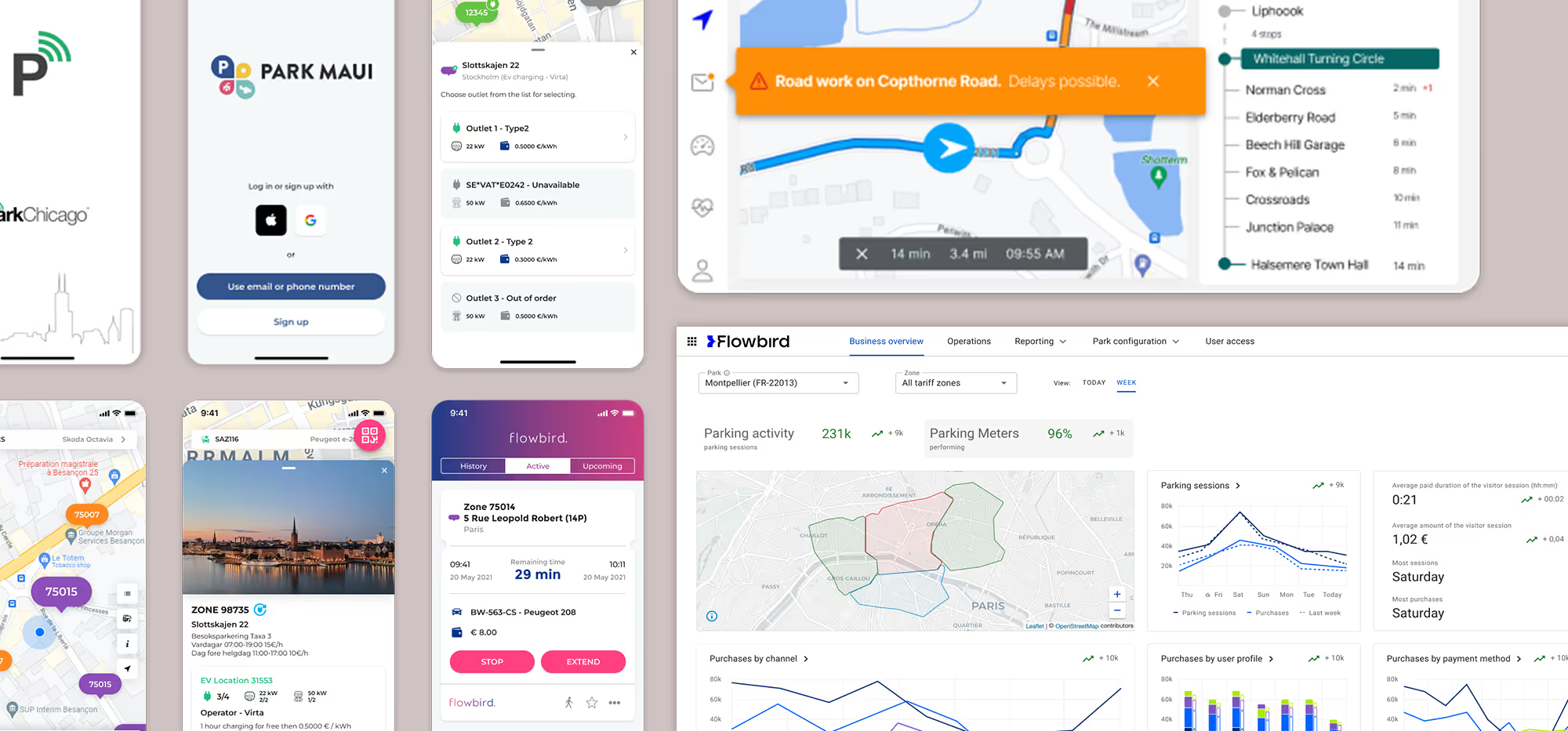
Flowbird
Flowbird operates across regions, products, and public-sector constraints. As teams scaled, effectiveness did not come from proximity.
Clear decision frameworks, shared systems, and embedded UX maturity reduced escalation and coordination overhead. Distributed teams aligned without constant intervention because expectations were explicit and artifacts carried context.
Ambiguity made for slow decisions. Clarity, even from a distance, fixed the team.

KIRU
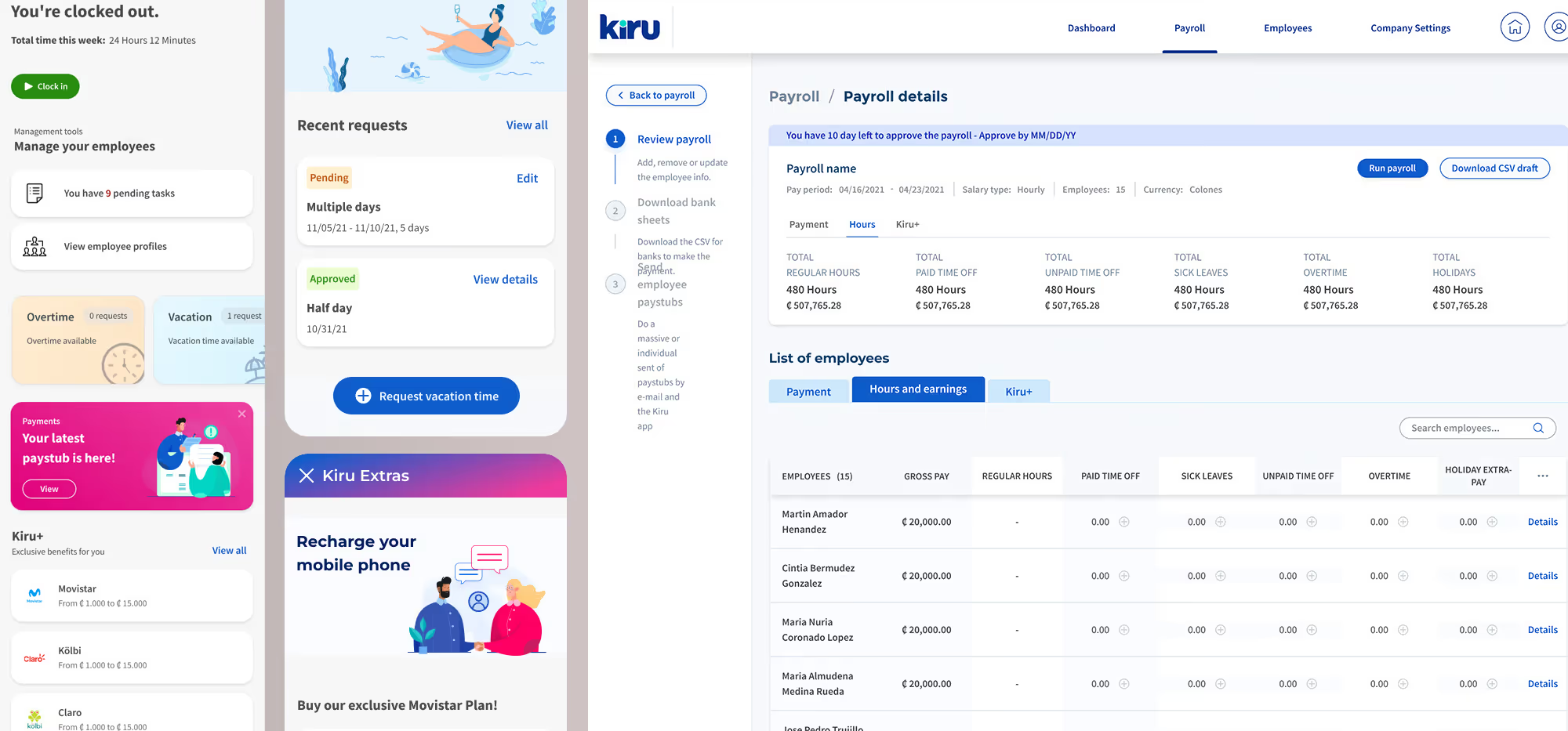
At KIRU, teams operated in a high-pressure fintech environment with little margin for error.
Clear ownership, lightweight systems, and trust reinforced through delivery enabled speed without chaos. Availability mattered less than accountability.
Speed became predictable because clarity replaced proximity.

Where AI Helps Distributed Teams and Where It Hurts
AI can reduce coordination tax in distributed environments, but only when clarity already exists.
AI helps when it:
- Reduces documentation overhead
- Summarizes decisions and context
- Surfaces patterns across distributed work
AI hurts when it:
- Replaces decision clarity
- Introduces inconsistent signals
- Masks ownership instead of reinforcing it
As with design systems, AI amplifies structure. It does not create it.
Distributed Teams in Practice
Distributed teams succeed when leaders design for clarity deliberately.
This includes:
- Explicit ownership and accountability
- Transparent decision frameworks
- Clear documentation standards
- Async-first norms with shared expectations
- Trust built through systems, not sentiment
Distributed teams do not require tolerance. They require design.
Closing: Clarity Is the Real Location Advantage
The most effective distributed teams are not exceptional because of where they work.
They are effective because clarity replaces proximity.
Distance removes the illusion of alignment. What remains is the truth of how an organization actually operates.
Leaders who design for clarity thrive in distributed environments. Leaders who rely on proximity are exposed faster.
[ Let's talk ]
Whether you’re exploring a new product, refining an experience, or interested in me becoming more permanently involved in your endevor, I’d love to connect. I bring experience across industries, mediums, and technologies, and I enjoy helping teams and individuals think through their most interesting design challenges.
[ Selected work ]
Flowbird: UX Maturity

Estate Guru: Modernizing Estate Planning
Kiru: A Payroll Startup

PayPal: Unified Card System
Viziphi: Visualizing Wealth
PayPal: Settings Redesign
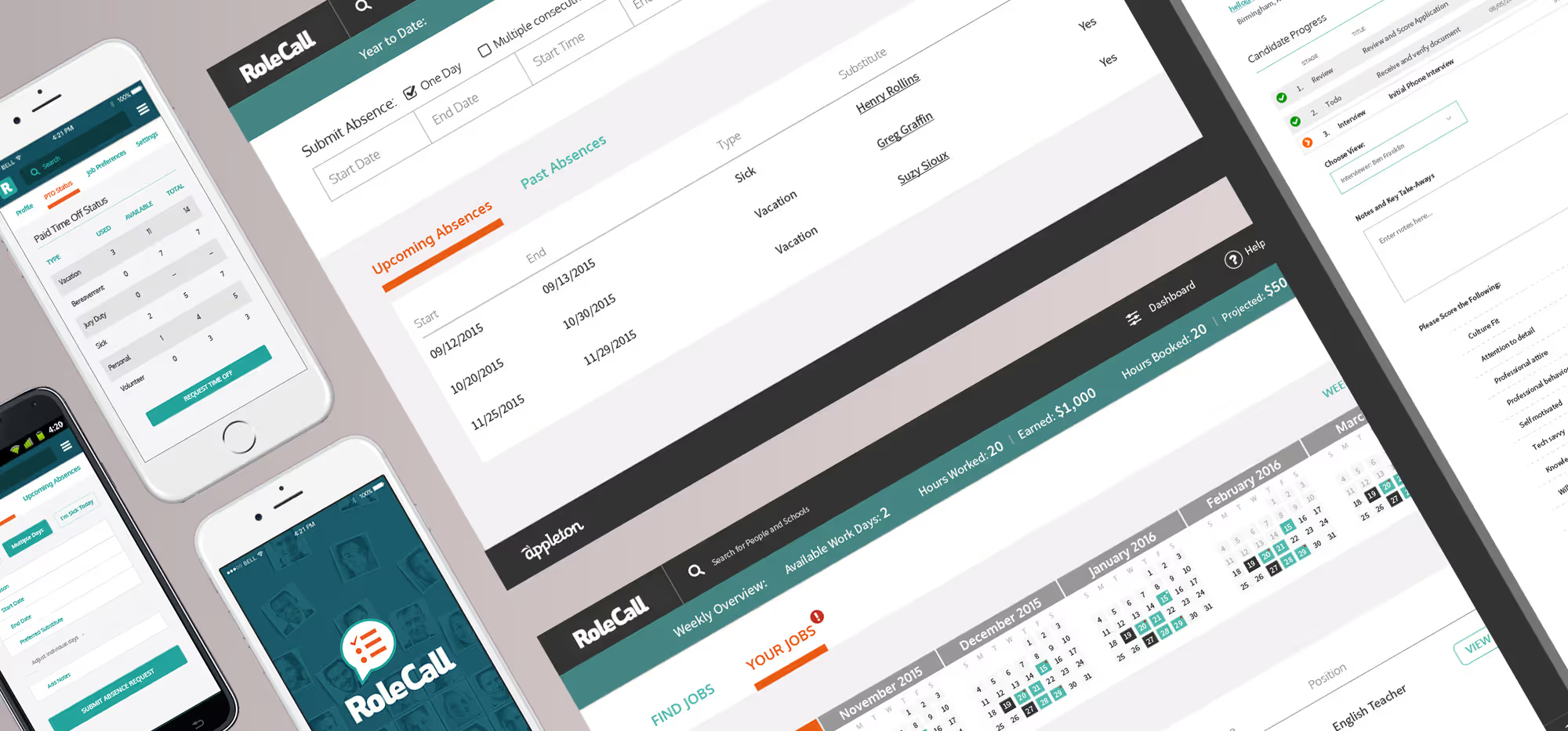
RoleCall: A Platform for K-12 Staffing
