Technology evolves.
Design is how it earns trust.
[ Career Brief ]
I started my career in agencies, moving from art direction into design and creative direction. Every new client meant learning a different business, audience, category, and set of constraints, often in a matter of weeks.
That pace taught me to look past the surface quickly. I had to understand how the pieces fit together, find the idea that mattered, and decide where the creative effort would make the biggest difference.
By the mid-2000s, I was working on digital campaigns and experiences for clients across finance, beauty, healthcare, fashion, and consumer products.
But I wanted to provide and facilitate, not just convince.
That led me to Viziphi in 2013, where I joined a co-founder developing a product to help financial professionals make better sense of investment information and communicate those insights more effectively.
It was a turning point. I wasn't designing around someone else's idea anymore. I was helping determine what the product should be, why it should exist, and how it could become useful.
From there, I moved deeper into product design and strategy, joining PayPal as a lead designer across core consumer web and mobile and Consumer Financial Services. At KIRU, I became Head of Design, helping build both the product and the design function as the company grew.
Later, at Flowbird, Estate Guru, and Euvic, I moved between hands-on product design, strategy, and design leadership across increasingly complex products and organizations. Additionally, I've been working with clients in commerce conversion as well as consulting small and medium size businesses on AI integration.
[ What I believe ]
People experience the whole, not the parts.
The product doesn't know which team owns it. Neither does the customer. They experience the brand, interface, workflow, support, and communication as one thing. Good design has to account for that whole experience, even when the organization behind it is divided into functions and systems.
Some problems aren't design problems.
A lot of product work begins with an assumption that something needs to be designed. Sometimes the better contribution is questioning the premise, changing the underlying workflow, or recognizing that the problem belongs somewhere else.
Design makes technology meaningful.
Technology asks people to trust it with something: their money, their time, their decisions, their work, or their personal information. Design is how that trust is built. When a product is understandable, predictable, and thoughtful about the consequences of its decisions, people can rely on it.
Expert users don't need simpler products. They need less friction.
Complex products often serve people who understand the domain better than the designer does. The goal isn't to hide that complexity or flatten the experience. It's to remove the unnecessary effort between knowing what you want to do and being able to do it.
Process enables creativity
Constraints and structure don’t limit creativity. They focus it. The best teams build clear processes so creative thinking can move faster and produce better outcomes.
Distributed teams can be exceptional teams
Remote and distributed organizations succeed when communication, ownership, and decision-making are intentional. With the right structure, distributed teams can outperform traditional ones.
Systems thinking beats feature thinking
Individual features matter less than how the system behaves as a whole. Designing durable product systems creates consistency, scalability, and better long-term outcomes.
AI is a multiplier, not a replacement
AI is accelerating how products are designed and built. The real advantage comes from teams that use these tools to deepen thinking, move faster, and explore better solutions.
[ What clients and Colleagues Say ]
"The expertise and leadership from Eric have been instrumental in transforming how we approach UX at Flowbird. The impact has gone beyond design, it has positively influenced our entire product development lifecycle."

Marek Juda, Digital Chief Operating Officer, Flowbird
"Eric brought a rare mix of big-picture thinking and meticulous detail. The design leadership work helped streamline complexity, and the collaborative style made them a trusted partner across the board."

Greg Bebenek, Chief Technology Officer, Euvic
"Eric’s an extraordinary design leader and collaborator. He drove strategy, customer research, and interaction design to explore the virtual card viability for PayPal. Together, we created a new product for the company portfolio that proved to be an incredible revenue driver."

Nick Gamino, Lead Content Designer, PayPal
Let's talk
Whether you're creating something new, transforming an existing product, or building the team to take it further, I'm interested in the problems worth solving.
[ Perspectives ]



[ FAQ ]

Eric has over 15+ years experience in product design. Eric has been focused on UX and product design, including senior leadership roles at global organizations, startups and high-growth companies like PayPal, Flowbird (Arrive) and Estate Guru. Previously, for ~10 years, Eric worked with global advertising and marketing agencies like Publicis, RAPP, Ogilvy, and Moxie Interactive.
I use AI to accelerate research synthesis and design iteration, but with governance: AI-generated insights require human verification before informing product decisions. The principle: AI accelerates, humans verify. This matters in regulated environments where trust cannot be compromised.
Eric has served as a Chief Product Designer, Head of Design, Product Design Lead, and UX leader—building and leading teams, establishing design systems, and guiding product strategy. Previous to Product Design/UX, Eric served as Art Director and Design Director
Eric’s experience spans fintech, estate planning, edtech, urban mobility, payroll, SaaS, and enterprise platforms, with a focus on complex systems, cross-platform, compliance-driven environments, and large-scale products.
Eric approaches design as a strategic discipline—grounded in research, systems thinking, and collaboration with product, engineering, and executive leadership.
By combining clarity, experience, and transparency. Eric focuses on shared understanding, measurable outcomes, and practical execution rather than design theater.
[ Selected work ]
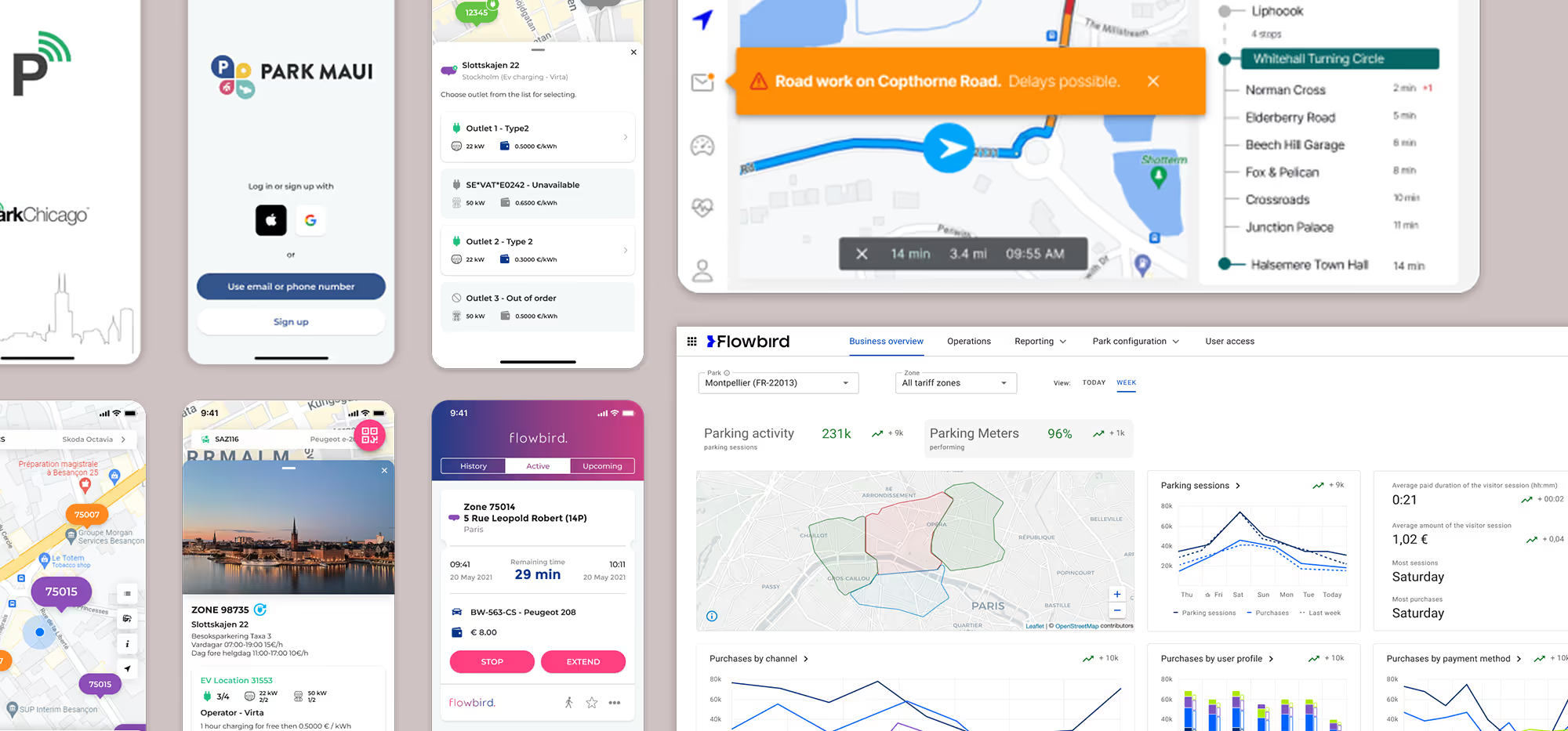
Flowbird: UX Maturity
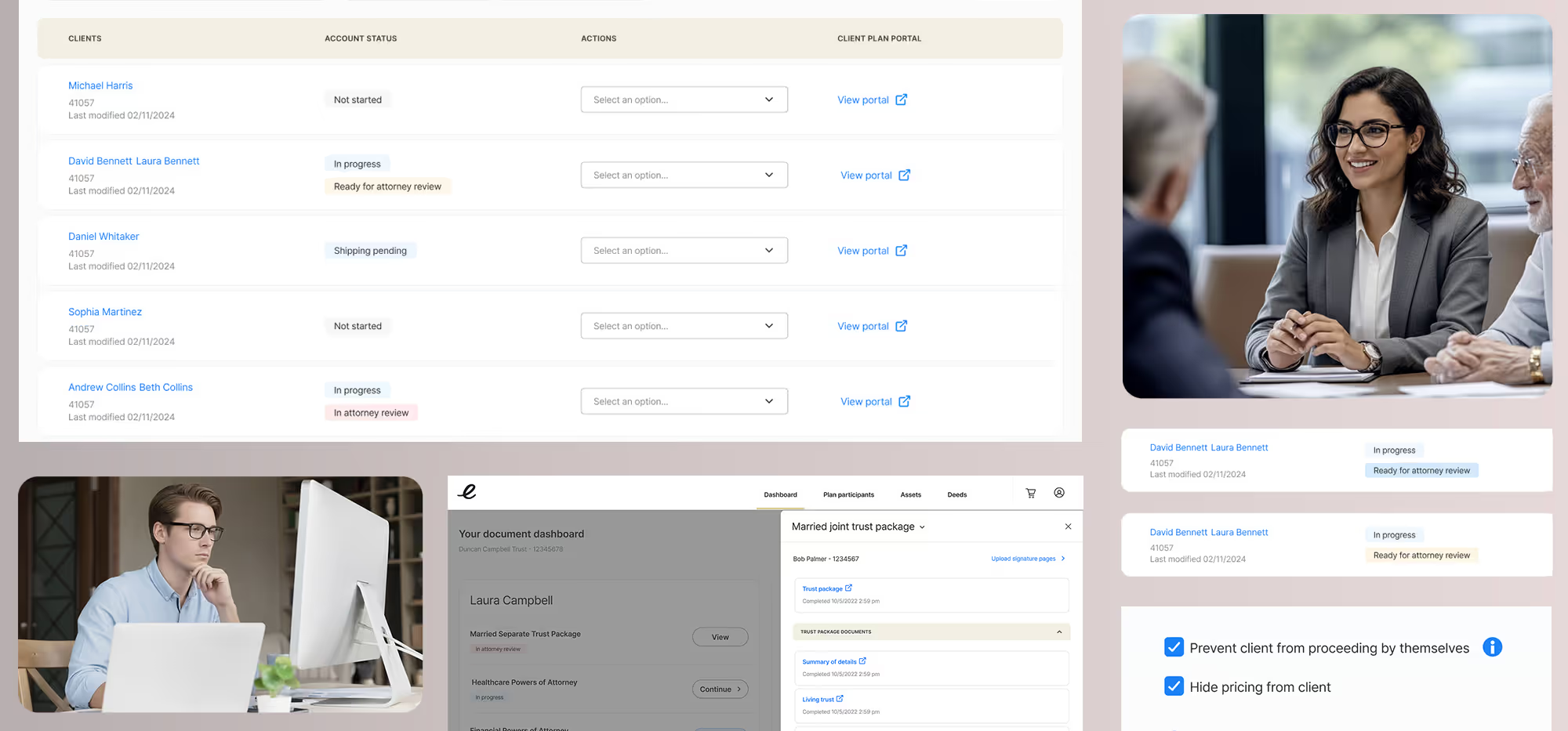
Estate Guru: Modernizing Estate Planning
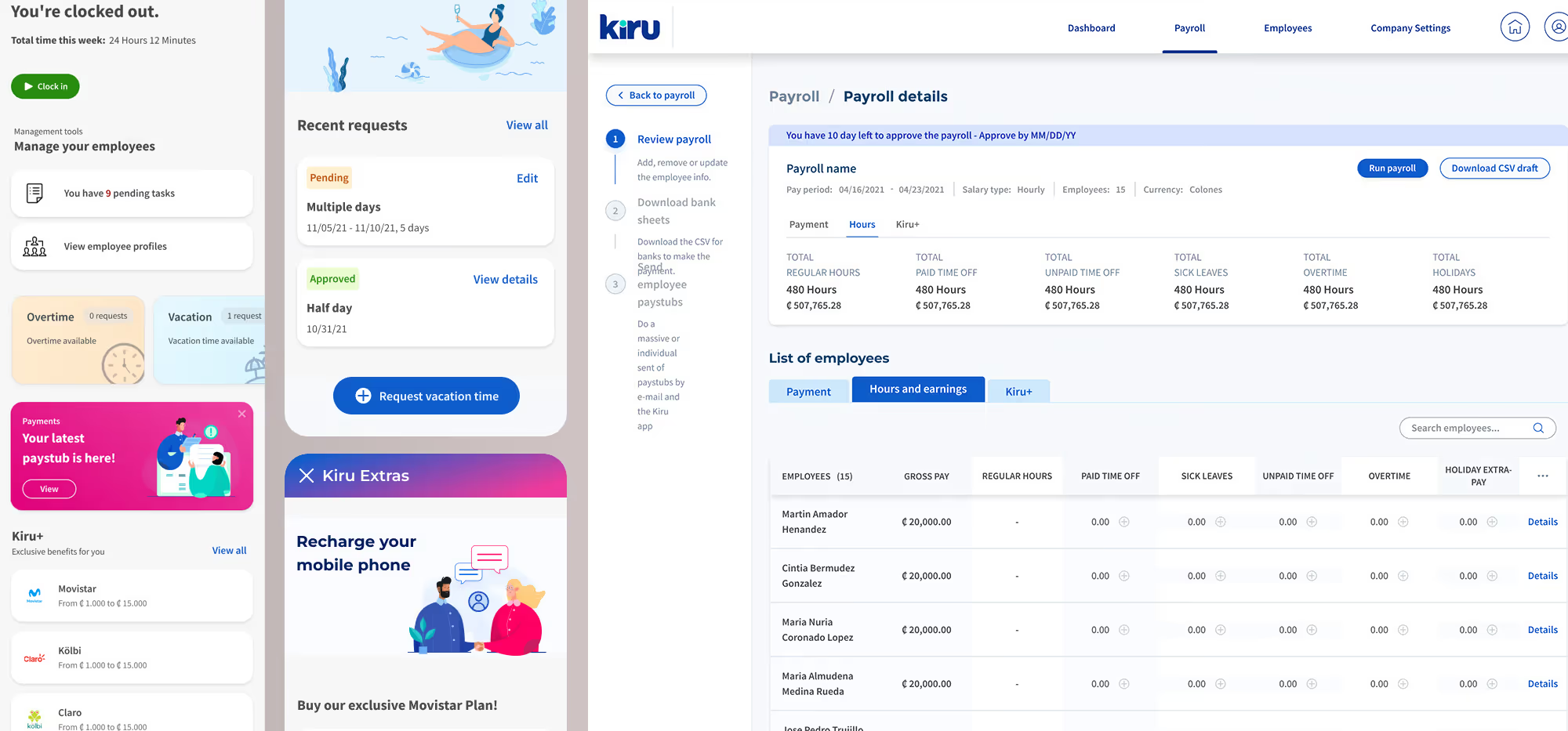
Kiru: A Payroll Startup

PayPal: Unified Card System
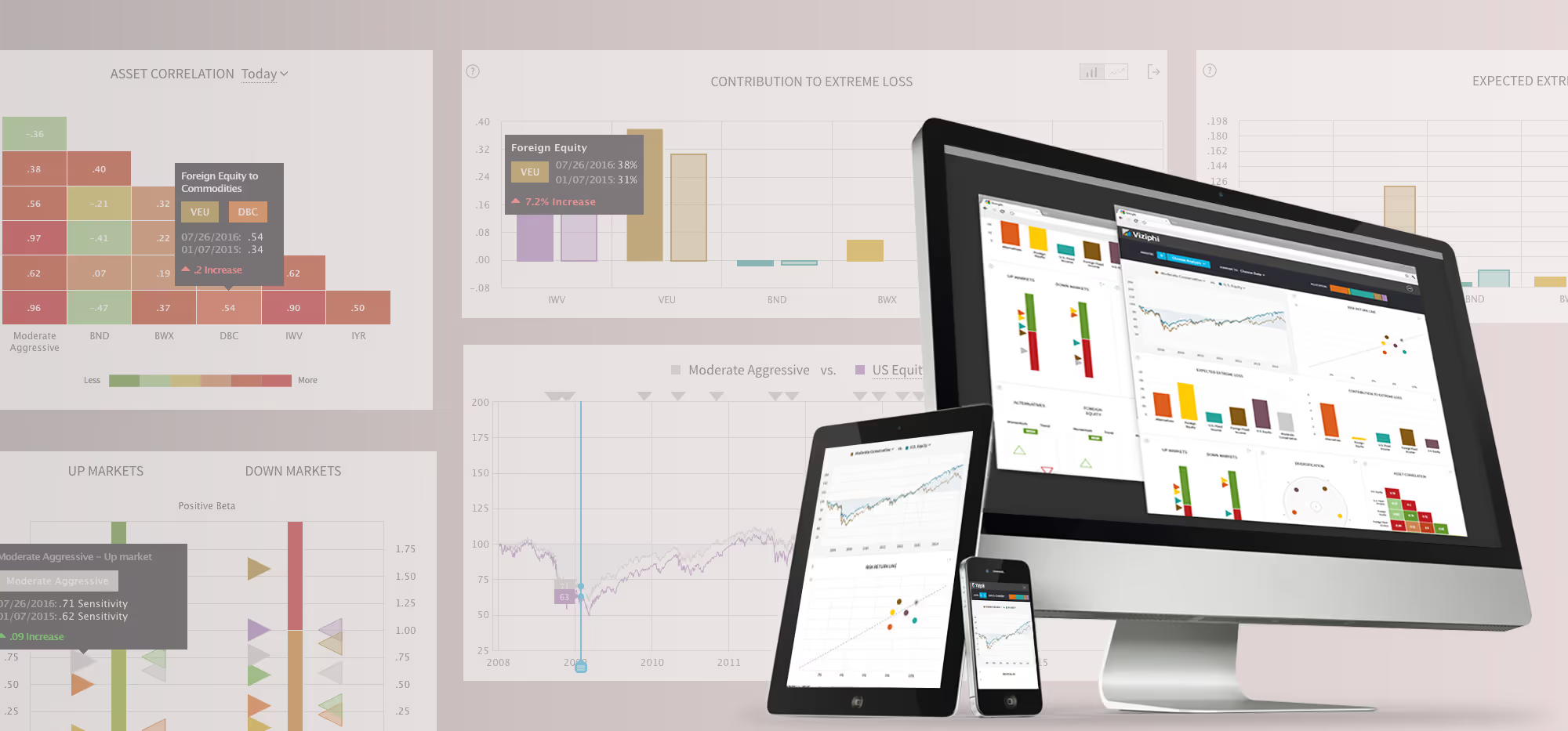
Viziphi: Visualizing Wealth
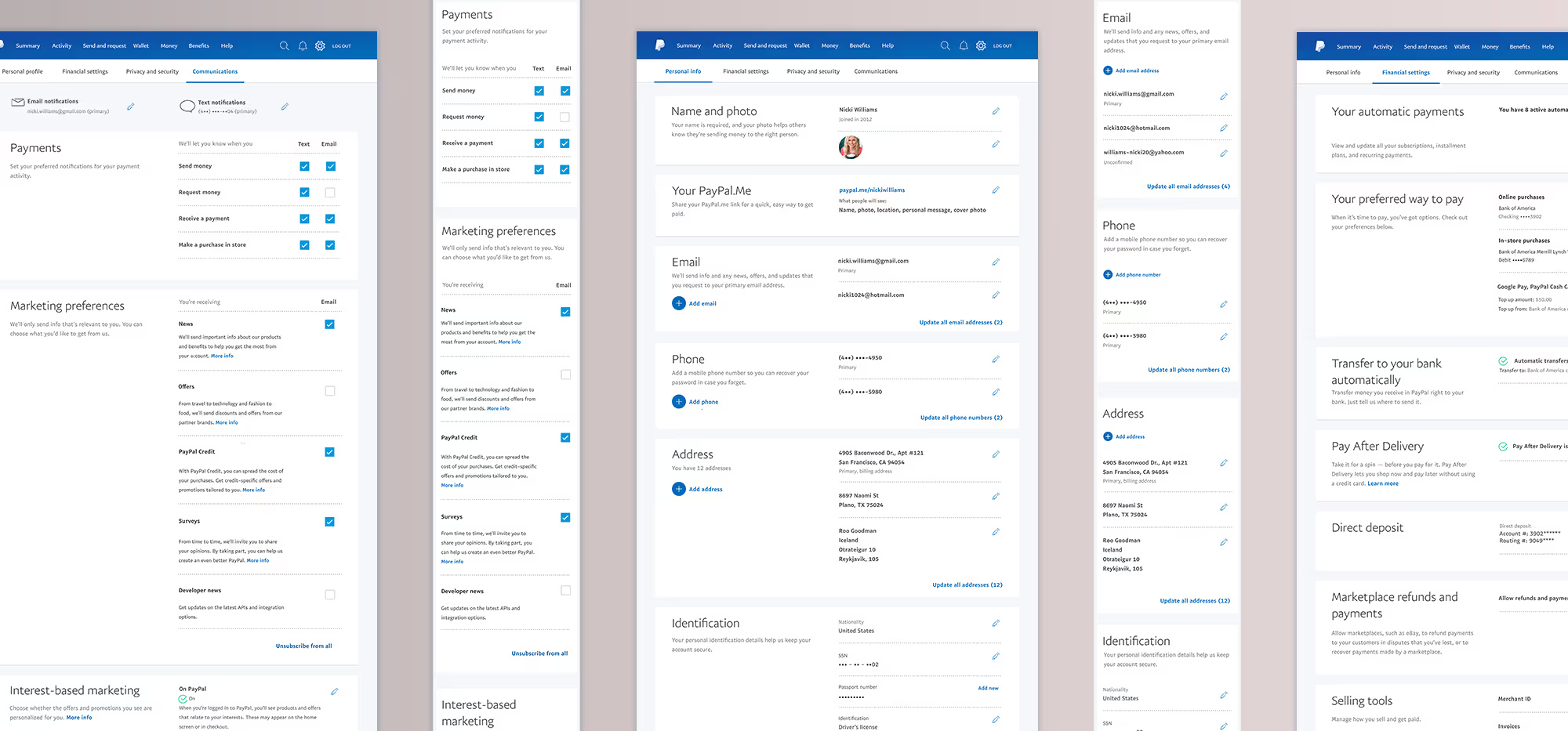
PayPal: Settings Redesign
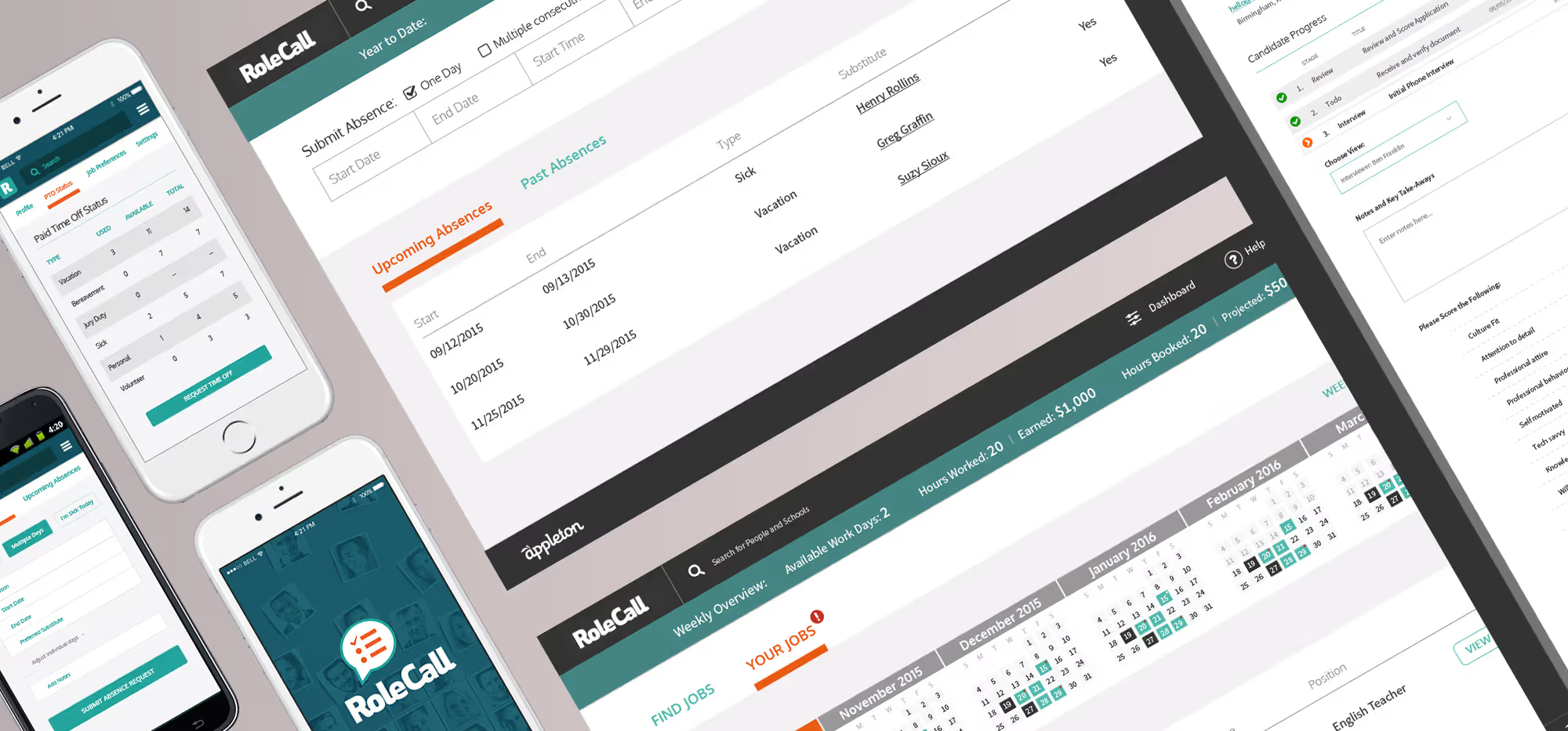
RoleCall: A Platform for K-12 Staffing