How to Tell If Your Product Organization Is Actually Working
Introduction: Activity Is Not Effectiveness
Many product organizations are extremely busy.
Roadmaps are full. Teams are shipping. Meetings fill calendars. Dashboards show progress. Yet despite all this activity, decisions feel harder than they should. Alignment takes longer. Exceptions multiply. Confidence erodes quietly.
This creates a dangerous illusion. When output is high, it is easy to assume the organization is working.
Often, it is not.
A product organization can be active while becoming less effective. The difference shows up not in what is shipped, but in how decisions feel over time.

Why Output Metrics Create False Confidence
Most organizations rely on output as a proxy for effectiveness.
Velocity, throughput, and roadmap completion are easy to measure. They create comfort and a sense of control. Unfortunately, they also hide important signals.
It is possible for:
If output is rising but decisions feel harder, something is broken.
- Velocity to increase while alignment deteriorates
- Features to ship while adoption stalls
- Roadmaps to complete while outcomes remain unclear
Output measures motion. It does not measure whether the organization is learning, aligning, or making better decisions.
Output can increase while decision friction quietly compounds.
What “Working” Actually Means at the Organizational Level
Effectiveness at the organizational level is not about speed alone. It is about what speed costs.
A product organization is working when decisions become easier over time, not when output increases.
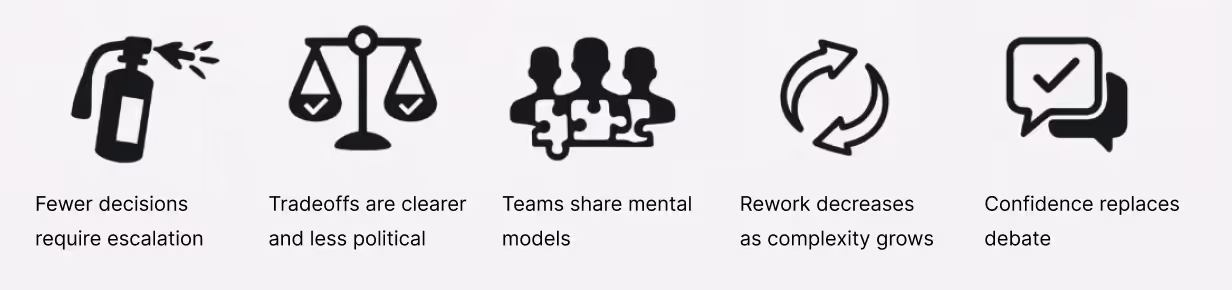
When an organization is effective:
- Fewer decisions require escalation
- Tradeoffs are clearer and less political
- Teams share mental models
- Rework decreases as complexity grows
- Confidence replaces debate
These are system behaviors. They cannot be attributed to individual performance alone.
When organizations are not working, the opposite happens. Every decision feels heavier. Alignment requires more effort. Exceptions become normal.
Effectiveness Looks Different at Each Stage
Decision friction shows up differently depending on scale, but the signal is consistent.
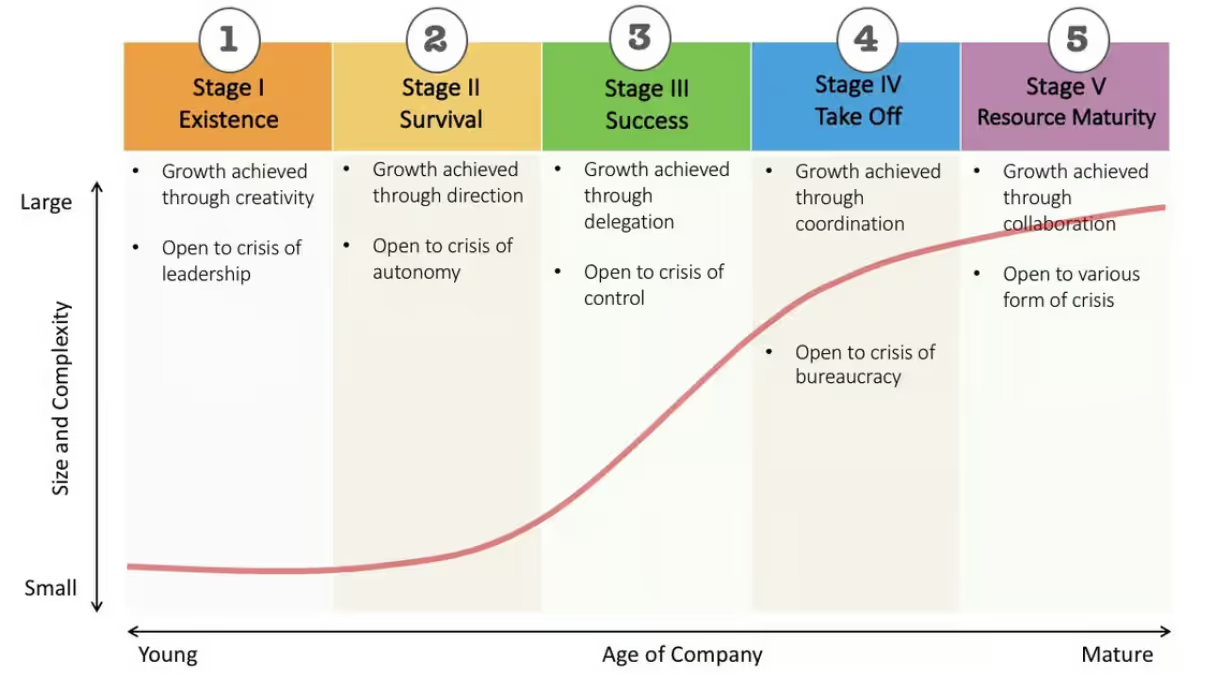
Early Stage and Startup
Decisions get easier when
- Ownership is explicit
- Feedback loops are short
- Tradeoffs are made quickly and visibly
False signal
Shipping fast while re-deciding fundamentals every week.
At this stage, effectiveness is measured by learning, not polish.
Growth Stage Organizations
Decisions get easier when
- Patterns repeat across teams
- UX maturity informs prioritization
- Teams stop reinventing solutions
False signal
Adding process without reducing ambiguity.
Growth exposes whether early clarity was intentional or accidental.
Enterprise Organizations
Decisions get easier when
- Escalation paths are clear
- Systems constrain choices productively
- Alignment replaces negotiation
False signal
Meeting heavy coordination used to compensate for weak decision frameworks.
At scale, effectiveness is revealed under pressure.
Effectiveness is revealed under pressure, not comfort.
The Hidden Signals Leaders Should Pay Attention To
Leaders often look in the wrong places for signals.
More useful indicators include:
- How often decisions are revisited
- Where escalation becomes necessary
- Whether teams ask better questions over time
- How ambiguity is handled
- How frequently exceptions override standards
Weak organizations leak energy through indecision. Strong ones conserve it through clarity.
Recognizing Effectiveness in Practice: Flowbird and KIRU
Effectiveness becomes visible when complexity increases
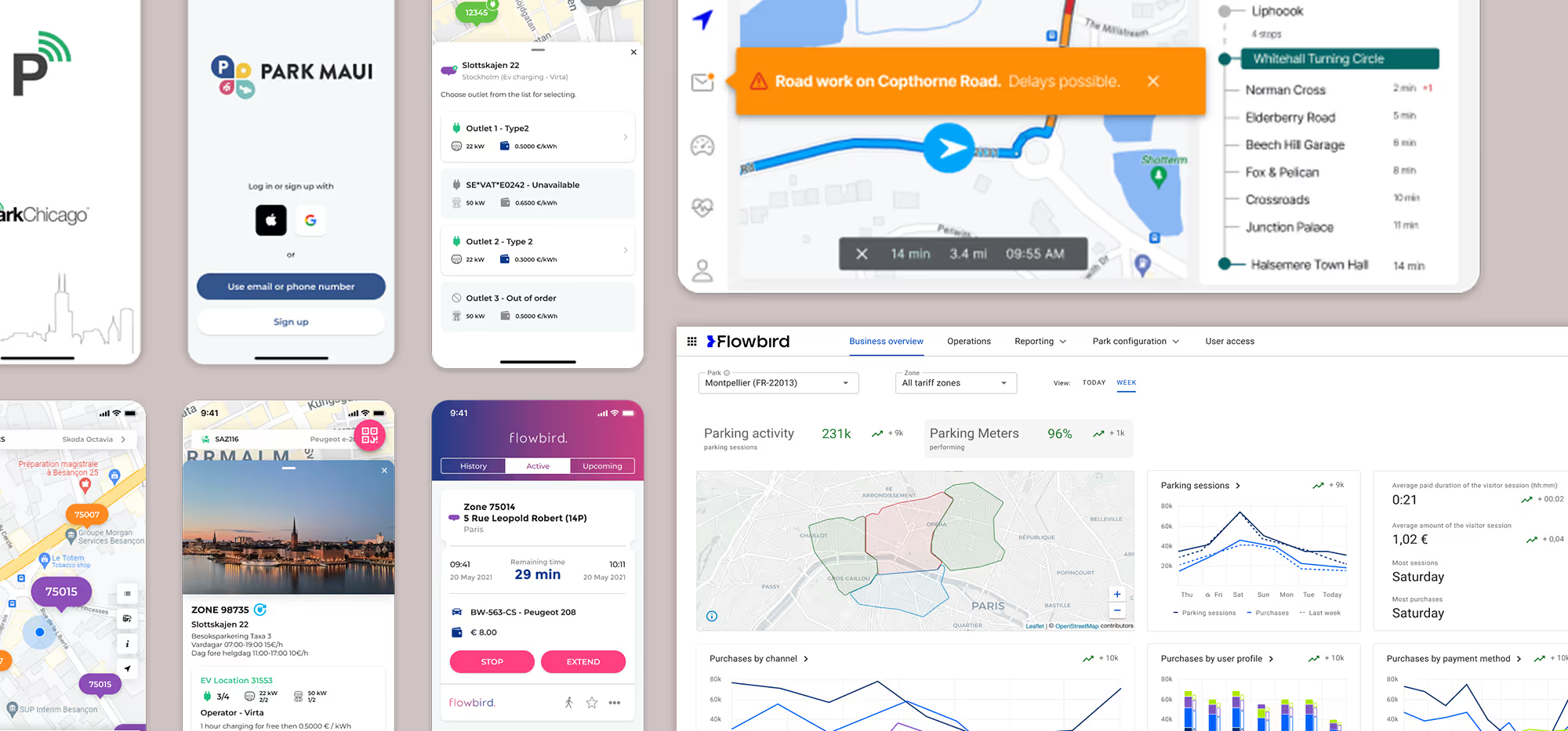
At Flowbird, teams operated across regions, products, and public sector constraints. Over time, effectiveness improved not because output increased, but because decisions required less coordination. UX became embedded in decision making, escalations decreased, and distributed teams aligned around shared outcomes with less effort.
Decisions became easier even as scale increased.
At KIRU, operating in a high pressure fintech environment required speed without chaos. Effectiveness showed up as predictable decision making, clear accountability, and trust reinforced through execution. Heroics gave way to clarity.
Speed became sustainable because decisions stopped bottlenecking.
When organizations work, decisions stop feeling heroic.
Where AI Helps, and Where It Cannot
AI is often introduced as a solution to organizational inefficiency. In practice, it amplifies what already exists.
AI can help by:
- Reducing information friction
- Surfacing patterns and anomalies
- Making decision signals visible faster
AI cannot:
- Clarify ownership
- Resolve conflicting incentives
- Replace leadership judgment
AI accelerates visibility. It does not remove decision friction. If decisions are unclear, AI exposes that faster.
Why Leaders Often Misread the Signals
Misreading effectiveness is common, especially in successful organizations.
Common reasons include:
- Early wins masking structural weakness
- Over reliance on dashboards
- Distance from day to day decisions
- Incentives that reward activity over outcomes
Leaders often see outputs. Teams feel friction. When those two diverge, effectiveness is already eroding.
What Actually Improves Organizational Effectiveness
Organizations that work share common traits:
- Clear ownership and accountability
- Explicit decision frameworks
- UX maturity embedded in strategy
- Systems that constrain choices productively
- Leadership that absorbs pressure
Effectiveness emerges from alignment, not control.

When Organizations Work, It Feels Different
Organizations that are working do not feel perpetually busy.
As complexity increases, they feel calmer. Decisions take less effort. Alignment compounds quietly. Teams spend less time negotiating and more time executing.
When that stops happening, output alone will not fix it.
Related: how I work with product organizations.
[ Let's talk ]
Whether you’re exploring a new product, refining an experience, or interested in me becoming more permanently involved in your endevor, I’d love to connect. I bring experience across industries, mediums, and technologies, and I enjoy helping teams and individuals think through their most interesting design challenges.
[ Selected work ]
Flowbird: UX Maturity
Estate Guru: Modernizing Estate Planning
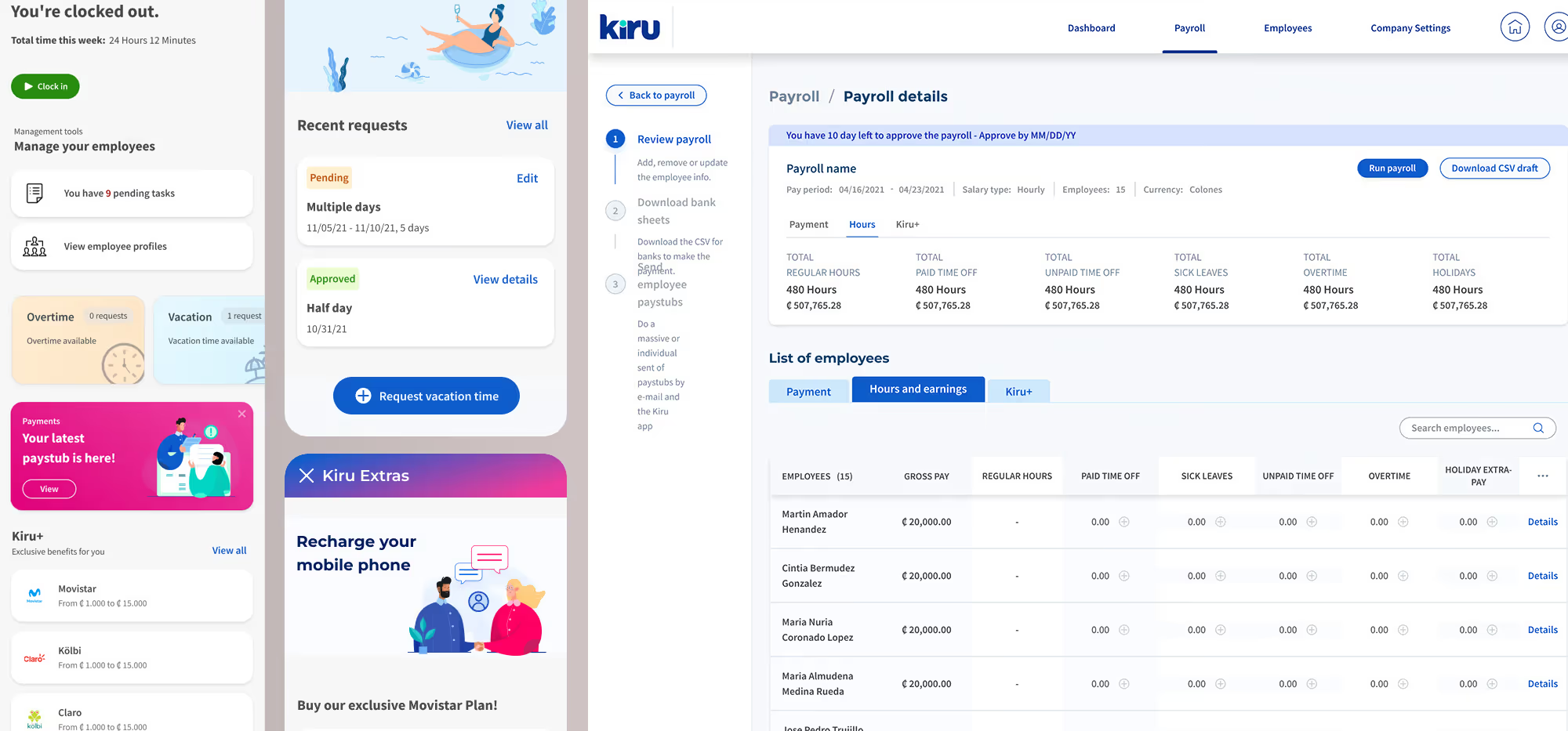
Kiru: A Payroll Startup

PayPal: Unified Card System
Viziphi: Visualizing Wealth
PayPal: Settings Redesign
RoleCall: A Platform for K-12 Staffing
