Why Product Teams Break Before Products Do
Introduction: Product Problems Are Often Team Problems
Products rarely fail all at once.
More often, quality erodes gradually. Decisions take longer. Rework increases.
Teams feel strain before users notice anything is wrong. By the time customers experience failure, the underlying system has usually been fragile for a while.
Many product failures are preceded by team breakdowns, not technical limitations or UX mistakes.
This matters because teams are the mechanism through which every product decision is made. When teams lose clarity, trust, or alignment, products inherit those weaknesses.
The Myth of the “Great Team” Snapshot
Teams are often evaluated at a single moment in time.
Early success creates a powerful illusion. When a product is gaining traction, teams appear effective, decisions feel fast, and weaknesses remain hidden. That same team, under more pressure, more stakeholders, or more scale, may struggle in ways that were not visible before.
Team health is not static. It is revealed under pressure.
Strong teams are not defined by how they perform when conditions are favorable. They are defined by how they respond when complexity increases.
Strong teams are not defined by talent alone.
They are resilient under pressure.

How Team Priorities Change as Products Scale
At every stage of a product’s life, speed matters. What changes is what makes speed safe.
Startup and Early Traction
Primary goal
Get real product in front of users quickly, validate assumptions, and iterate.
What enables speed
- Tight feedback loops
- Clear ownership
- Minimal process
Common failure mode
Heroics become the default operating model. This works briefly, then becomes fragile as complexity increases.
Growth and Scale-Up
Primary goal
Maintain momentum while reducing rework and inconsistency.
What enables speed
- Clear decision frameworks
- Early UX involvement
- Repeatable patterns
- Lightweight operating discipline
Common failure mode
Headcount grows faster than clarity. Decisions slow down. Ownership becomes ambiguous. Product quality drifts.
At every stage, speed is the goal.
What changes is what makes speed safe.
Enterprise and Organizational Complexity
Primary goal
Maintain coherence across teams, products, and markets while managing risk.
What enables speed
- Clear operating models
- Explicit ownership and escalation paths
- Strong systems and shared foundations
- Cross-functional alignment
Common failure mode
Silos, misaligned incentives, and decision latency disguised as collaboration.
Common Failure Modes Inside Product Teams
Across all stages, the same patterns appear again and again:
- Unclear ownership and accountability
- Decision bottlenecks disguised as collaboration
- Role confusion between product, design, and engineering
- Process replacing trust
- Speed prioritized over clarity
Teams Are Systems, Not Headcount
Teams are systems of incentives, trust, and decision rights.
Adding people does not fix broken systems. Process alone does not create clarity. Structure shapes behavior more than intent.
When teams are designed well, they absorb pressure without collapsing. When they are not, pressure reveals every weakness.
If you want deeper exploration of how decision clarity and systems affect product outcomes, related topics such as UX maturity and design systems examine adjacent dimensions of this challenge.
Sustaining Teams Through Scale: Flowbird and KIRU
Team durability becomes most visible in complex environments.
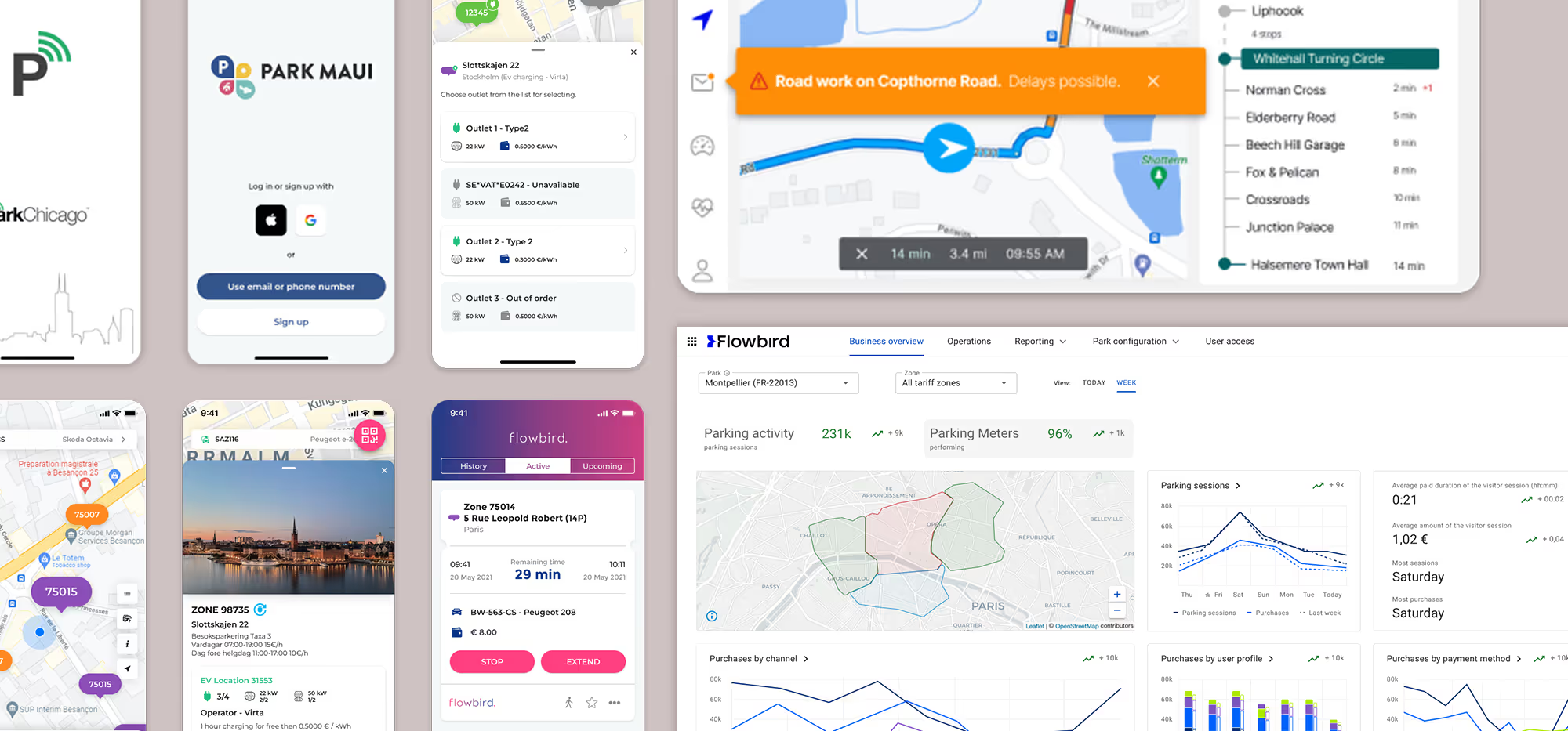
At Flowbird, teams operated across regions, products, and public sector constraints. The challenge was not talent. It was alignment. Shifting from delivery-focused execution to strategic partnership required clear ownership, decision frameworks that scaled, and leadership that absorbed pressure rather than pushing it downstream.
Teams became more durable when clarity scaled alongside responsibility.
At KIRU, speed was essential, but heroics were not sustainable. Operating in a high-growth fintech environment required early clarity around ownership, trust across functions, and decision frameworks that empowered autonomy without chaos.
Speed only became sustainable once ownership and trust were explicit.

Where AI Helps, and Where It Cannot
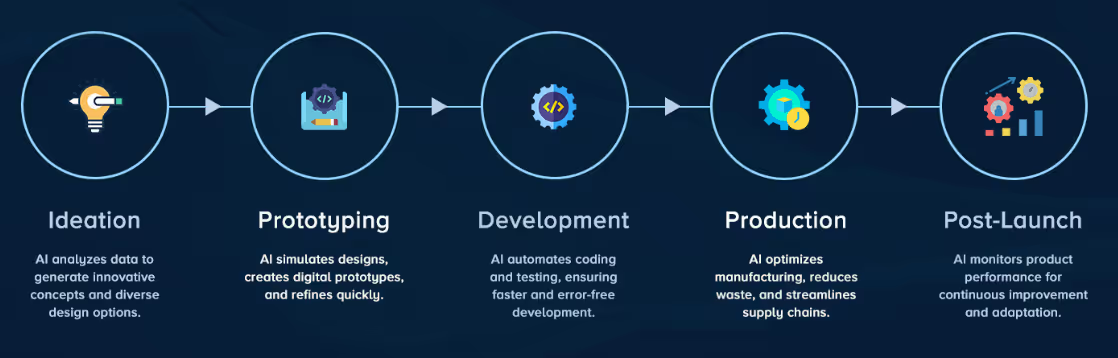
AI is already changing how product teams operate, but it does not change the underlying requirement.
Used correctly, AI can:
- Reduce manual overhead
- Accelerate execution
- Surface inconsistencies and risk
AI cannot:
- Resolve unclear ownership
- Replace trust
- Fix broken incentives
AI amplifies team dynamics, good or bad. As speed increases, clarity becomes more important, not less.
AI increases speed. Leadership protects quality.
Leadership Determines Team Durability
Durable teams do not emerge accidentally.
Leadership determines whether pressure clarifies priorities or fractures trust.
That responsibility includes:
- Establishing clear decision frameworks
- Protecting focus
- Reinforcing accountability
- Modeling tradeoff discipline
Strong leadership creates environments where teams can move quickly without breaking themselves or the product.
Leadership determines whether pressure clarifies or fractures teams.
Signals a Team Is Breaking Before the Product Does
Early warning signs often appear before customers notice problems:
- Decisions stall or escalate repeatedly
- Teams re-litigate the same issues
- Ownership becomes ambiguous
- Delivery speed fluctuates unpredictably
- Trust erodes quietly
These are signals, not failures. Ignoring them is what turns strain into breakdown.
What Actually Works in Durable Product Teams
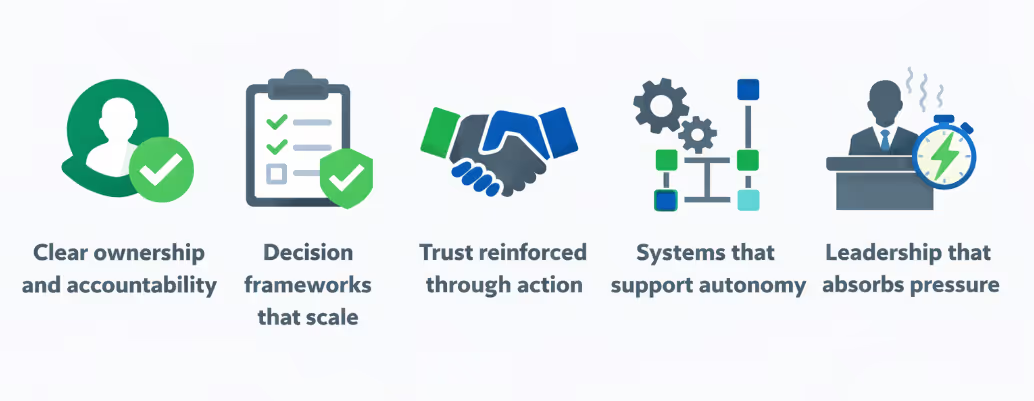
Durable teams share common traits:
- Clear ownership and accountability
- Decision frameworks that scale
- Trust reinforced through action
- Systems that support autonomy
- Leadership that absorbs pressure
Durability is designed, not accidental.
Teams Are the First Product
Before users experience a broken product, teams experience a broken system.
Organizations that invest in team durability protect product quality long before failure becomes visible. Teams are the first product. Everything else depends on them.
Related: design for early-stage teams.
[ Let's talk ]
Whether you’re exploring a new product, refining an experience, or interested in me becoming more permanently involved in your endevor, I’d love to connect. I bring experience across industries, mediums, and technologies, and I enjoy helping teams and individuals think through their most interesting design challenges.
[ Selected work ]
Flowbird: UX Maturity
Estate Guru: Modernizing Estate Planning
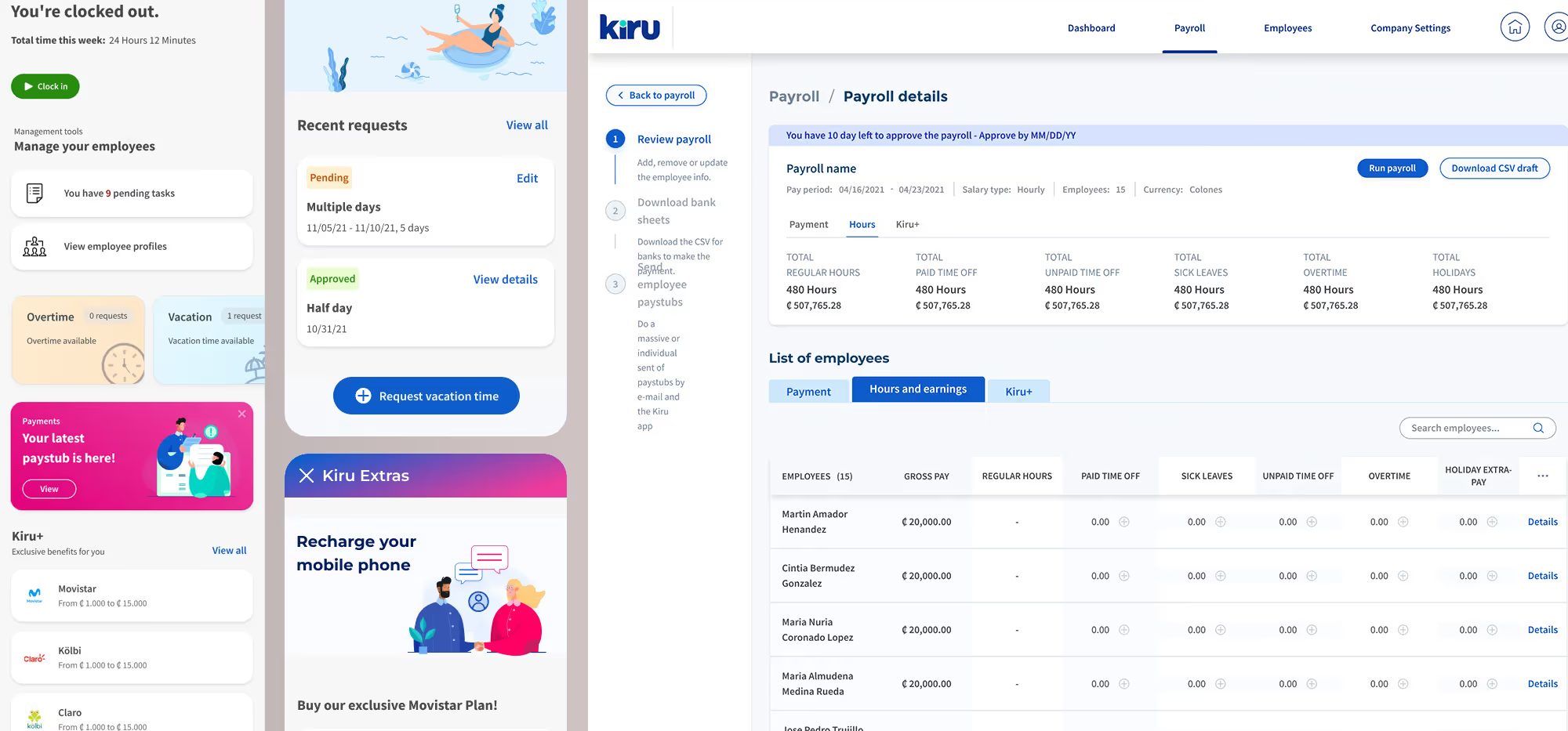
Kiru: A Payroll Startup

PayPal: Unified Card System
Viziphi: Visualizing Wealth
PayPal: Settings Redesign
RoleCall: A Platform for K-12 Staffing
